The analysis reveals the economic potential of tidal stream and wave energy if steps are taken to ensure the country remains a world-leading destination for developing marine energy.
Artificial Intelligence is often seen as an enemy of energy transition. In its outlook on AI and energy, Nature warns that the ongoing surge in the use of AI may, by 2026, increase global energy consumption by at least the equivalent of Sweden’s annual usage and, in the worst-case scenario, that of Germany. At the same time, various machine learning applications could not only help monitor the health of energy grids or give recommendations. In some cases, they could even save lives.
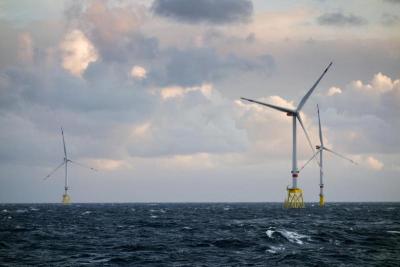
New technology that enables robots to work stably in turbulent seas could make it cheaper, faster and safer to maintain offshore wind farms and tidal turbines, researchers say.
University of Edinburgh Professor Henry Jeffrey has been awarded the 2024 Vi Maris award during the OEE2024 Ocean Energy Europe Conference & Exhibition in Aviemore, Scotland.
On October 1 2024, National Grid ESO, Britain’s electricity system operator, became the new National Energy System Operator (NESO) – an independent, public corporation with additional responsibilities in operating and planning Britain’s electricity and gas networks.
Less than three weeks ago, the UK shut its last coal power station, marking the symbolic end of its coal-reliant industrial era. The gradual phase-out of coal in the UK’s energy sector over the last three decades has helped lower the share of greenhouse gases emitted through electricity generation, which dropped from 34% in 1990 to around 14% today. As pointed out by Mark Winskel in his interview for Energy@Edinburgh, the UK can be proud of this achievement. Indeed, UK power plants’ percentage contribution to total emissions is roughly half that of the EU’s electricity sector, and around five times lower than the global average.